Sometimes the Missing Piece Isn't WHAT They're Doing.
You can give someone the right exercise, the right mobility work, the right breathing strategy—and still watch them struggle to carry the change into everyday life.
How much effort are they using to do it?
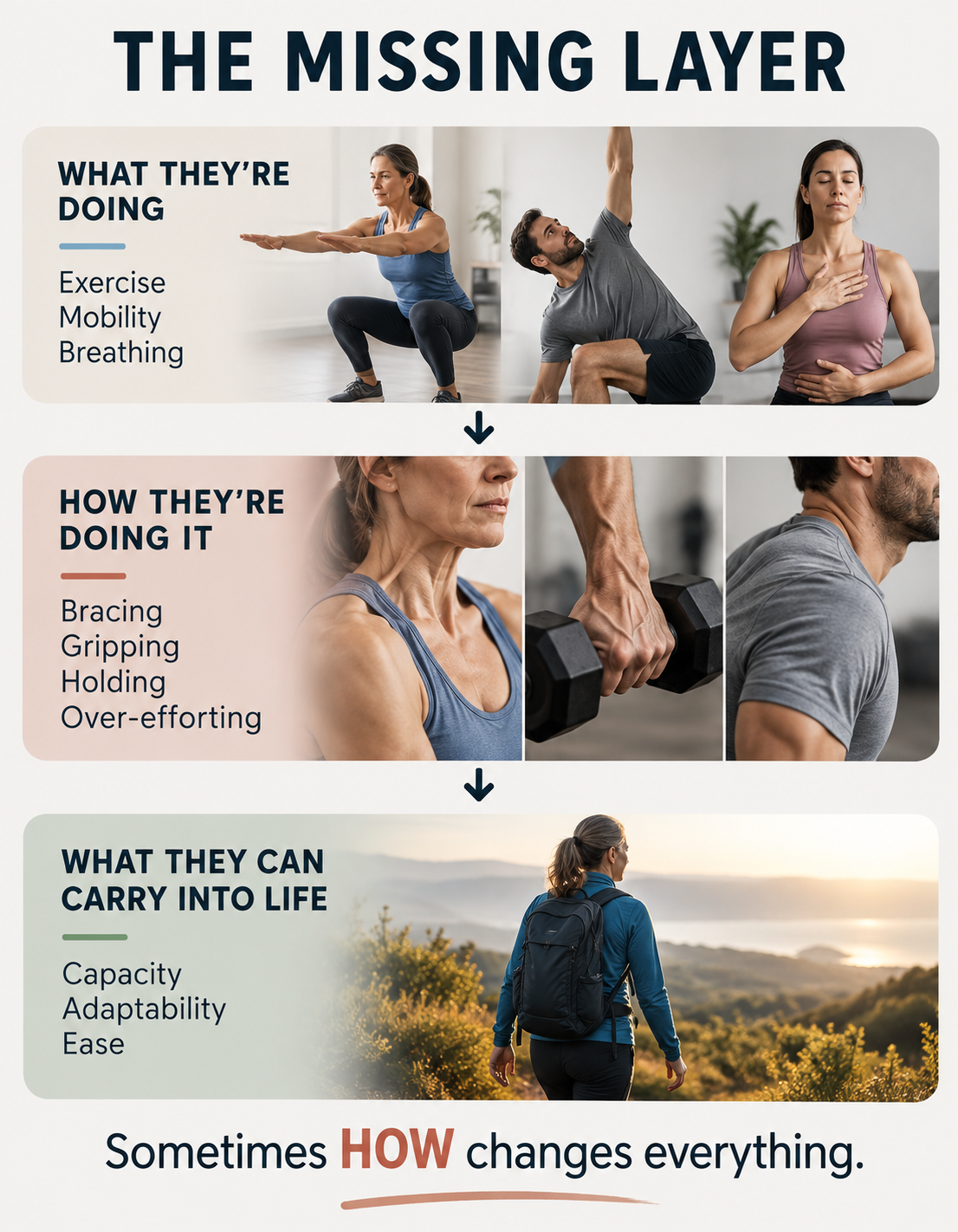
The Exercise Looks Right.
But look a little closer.
They're gripping their toes.
Holding their breath.
Tightening their jaw.
Lifting their shoulders.
Using far more effort than the movement requires.
The person may be completing the task successfully...
while practicing something you never intended to teach.
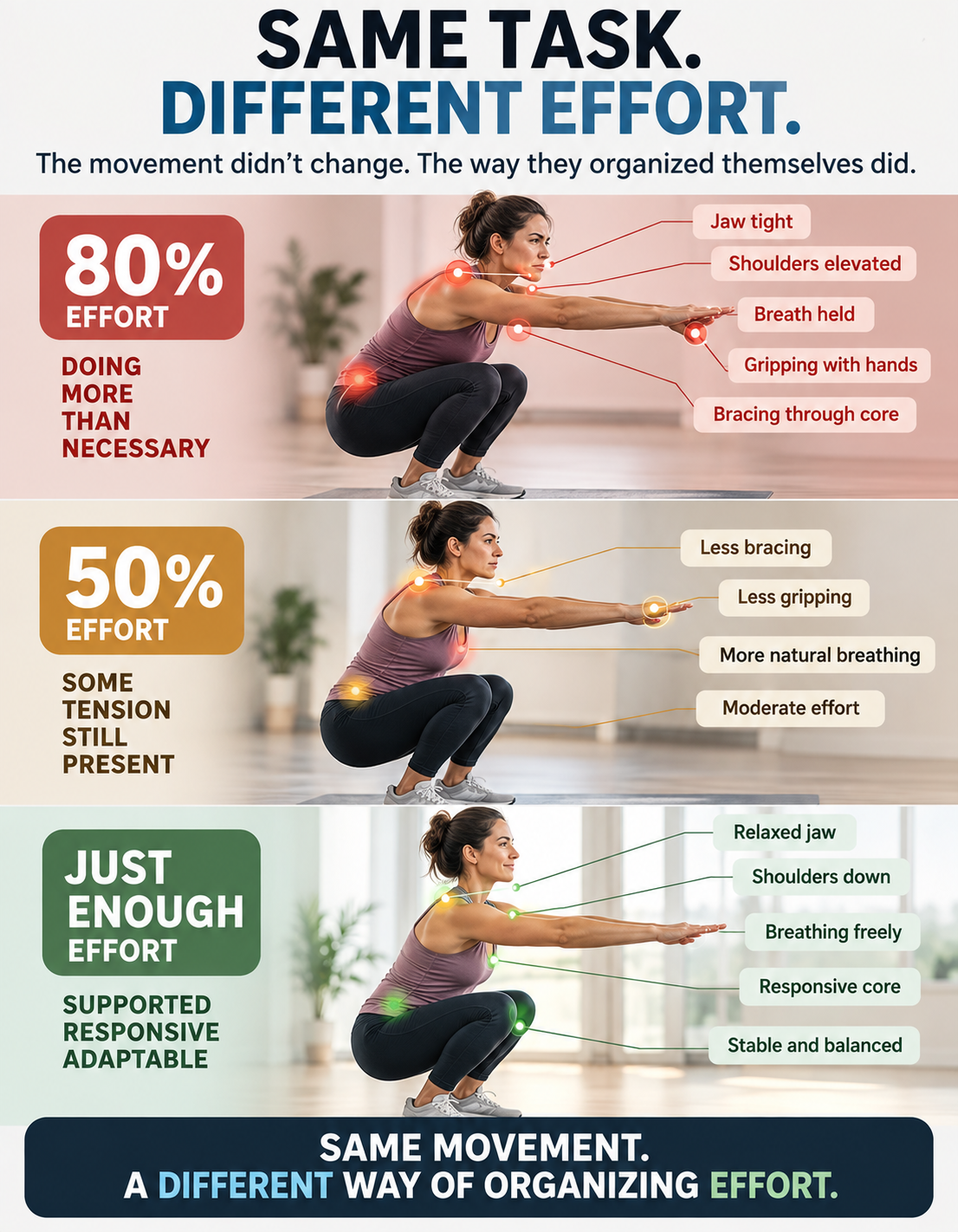
Instead of Only Asking,
“What Does This Person Need to Do?”
We can also begin asking:
How are they doing it?
How much effort are they using?
Where do they brace?
What happens to their breathing?
What changes when they're uncertain?
Can they accomplish the same task with a little less unnecessary effort?
That doesn't replace exercise, strengthening, mobility work, manual therapy, breathing work, or your clinical approach.
It gives you another layer to observe.
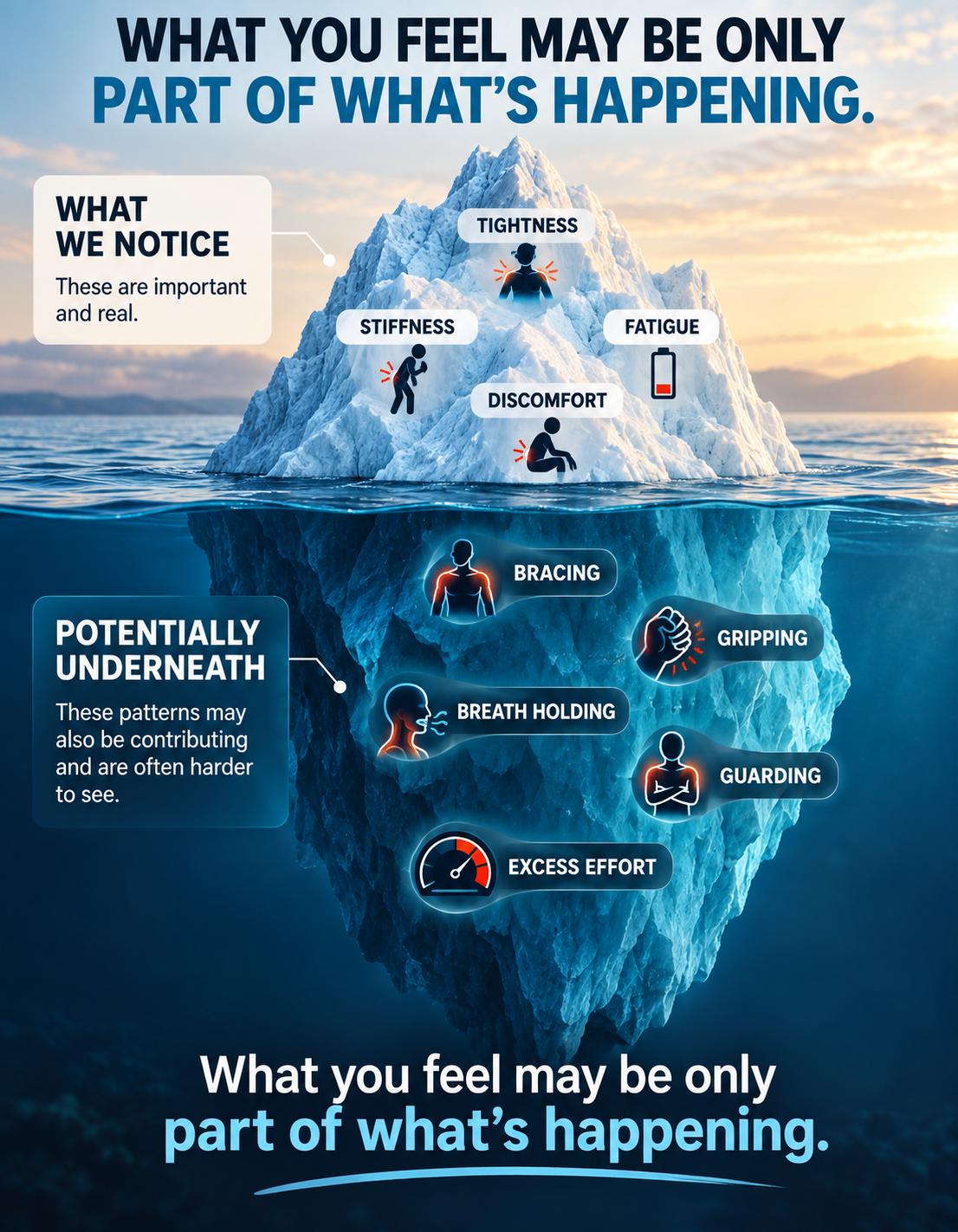
What You Feel May Be Only Part of the Story.
Pain, tightness, stiffness, fatigue and restricted movement matter.
But alongside what someone feels, there may also be patterns of bracing, gripping, guarding, breath holding or unnecessary effort worth paying attention to.
The Goal Isn't Simply to Make the Movement Look Better.
It's to help the person become better at noticing, adjusting and responding—so they aren't completely dependent on us to create the change for them.
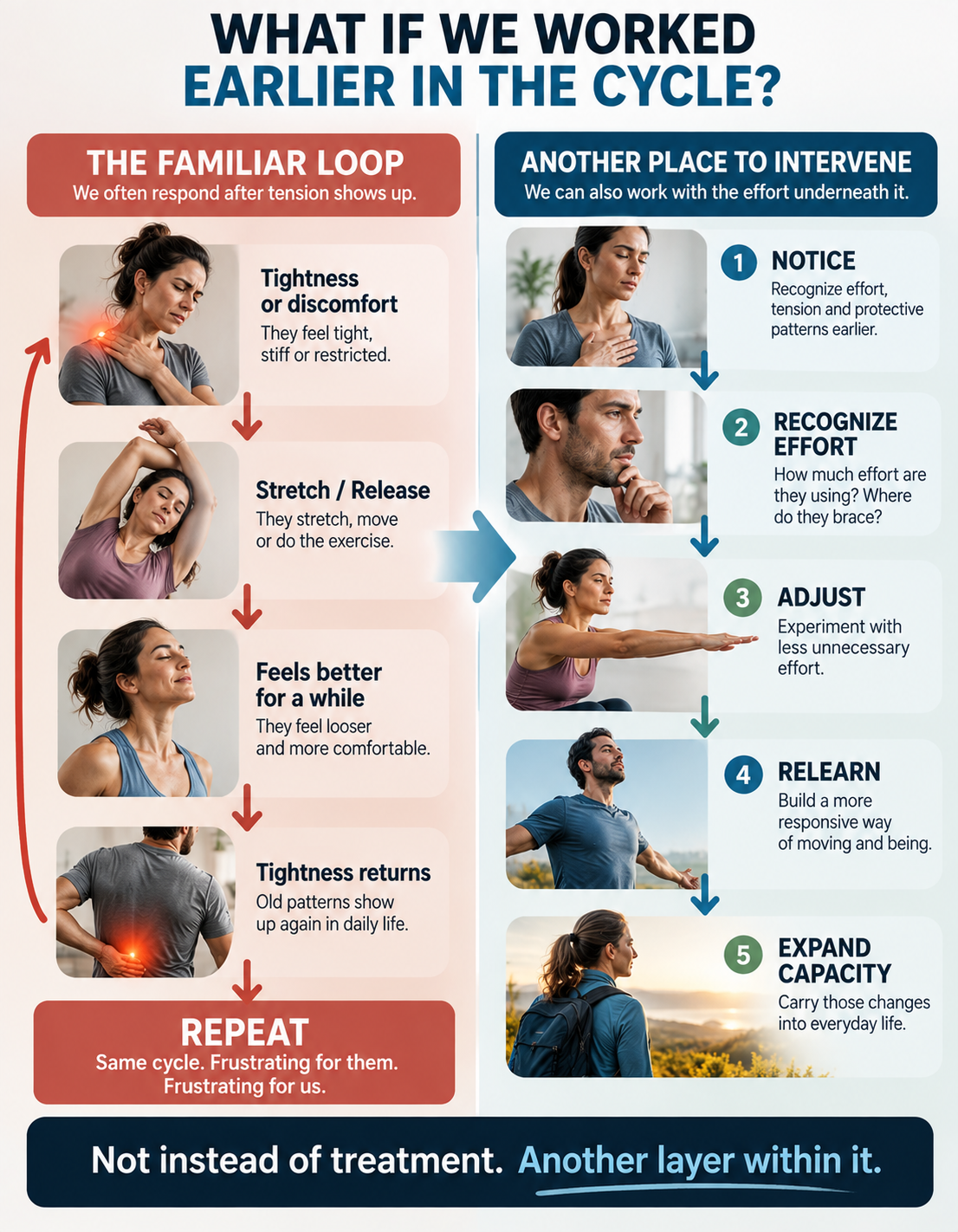
From Doing More to Becoming More Responsive.
A simple framework for paying attention to the effort underneath movement.
Notice
Recognize effort, tension and protective patterns earlier.
Calibrate
Explore how much effort the task actually requires.
Expand
Gradually increase available capacity without simply adding more effort.
Integrate
Help the person carry those discoveries beyond the session and into life.
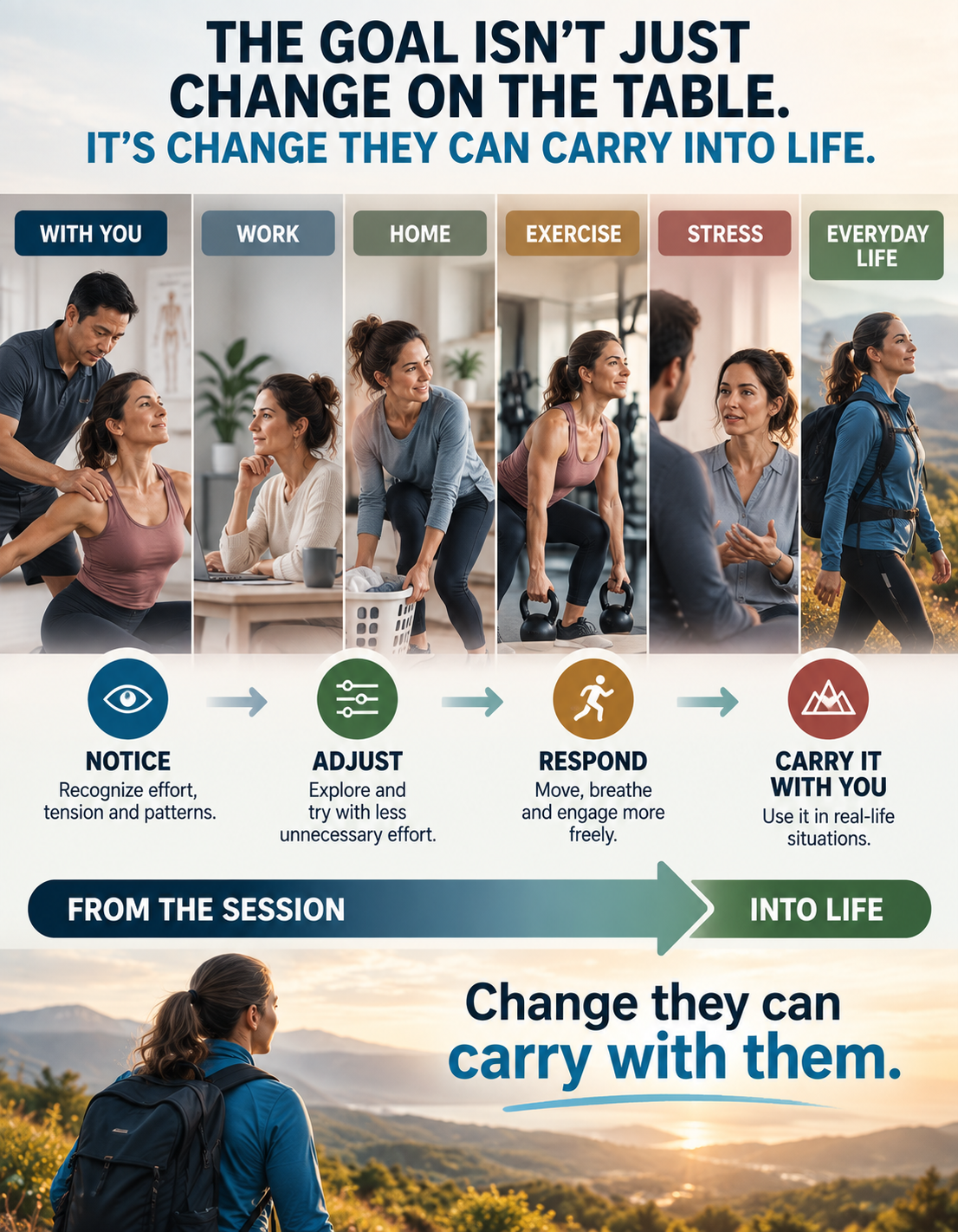
The Goal Isn't Just Change on the Table.
It's change they can carry into life.
A person may move beautifully while you're standing beside them.
But life doesn't happen in your treatment room.
It happens when they're tired.
Working.
Exercising.
Driving.
Having a difficult conversation.
Picking up their child.
Or simply trying to get through a stressful day.
Can they notice and adjust without us standing there?
You Don't Need Another Protocol.
This isn't about replacing what you already do.
And it isn't another collection of exercises.
It's a way of becoming more attentive to how people organize effort while they're doing what you're already asking them to do.
Then helping them become better at noticing and adjusting that effort themselves.
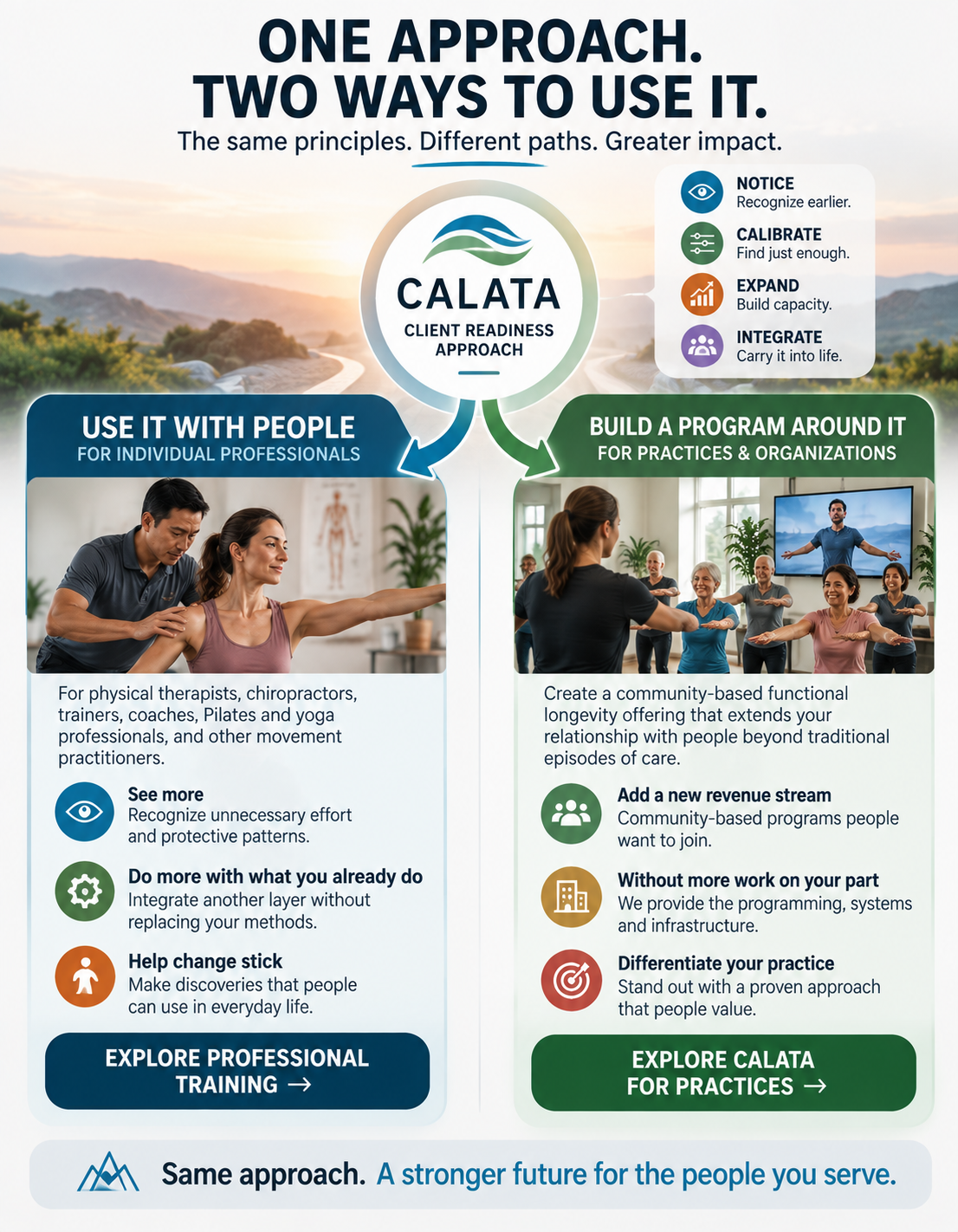
One Approach. Two Ways to Use It.
Bring the approach into your individual work—or build something larger around it.
How Do You Want to Use It?
Bring the Approach Into Your Work.
For physical therapists, chiropractors, trainers, coaches, Pilates and yoga professionals, and other movement practitioners who want another way to understand what may be happening underneath movement.
Learn to recognize unnecessary effort, help people experiment with doing less, and make those discoveries more usable in everyday life.
Explore Professional Training →Bring the Approach Into Your Community.
Create a community-based functional longevity offering that gives people somewhere to continue developing capacity, movement and body awareness beyond traditional episodes of care.
Without having to build the programming, systems and infrastructure from scratch.
Explore CALATA for Practices →Better Tools for the Part We Often Miss.
Strength matters.
Mobility matters.
Breathing matters.
But how someone organizes themselves while doing those things matters too.
That's the territory we're exploring.