You And Your People Need More. But the Traditional Clinic Model Gives You Less Room to Give It.
Good owners want to reward good people. Good employees want to grow. But rising costs, heavier administrative demands and reimbursement pressure increasingly put both sides inside the same squeeze.
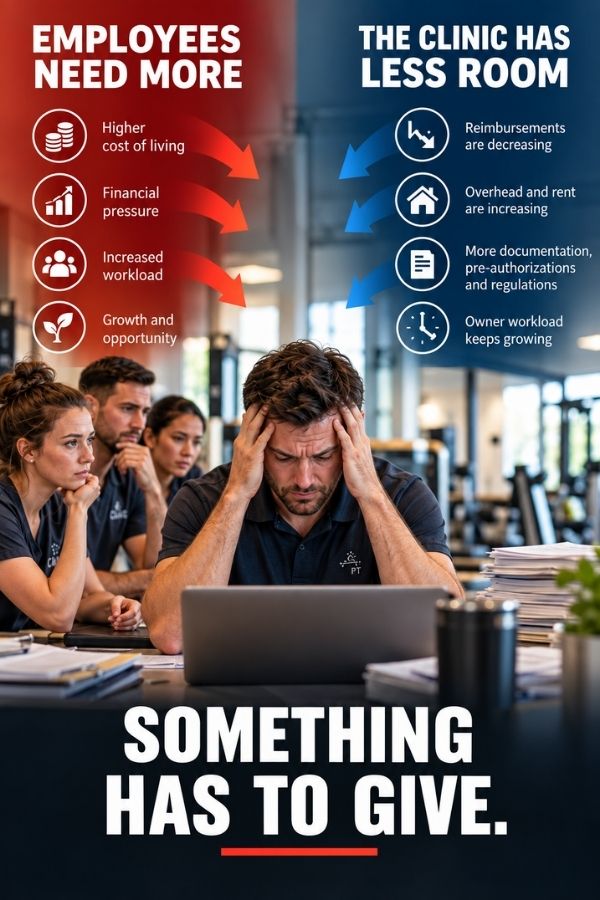
This isn't an employee problem. And it isn't an owner problem.
Employees are living in a more expensive world. They want to earn more, see a path forward and feel that the extra energy they bring to work can actually lead somewhere.
At the same time, clinic owners are dealing with higher overhead, administrative complexity, documentation, authorizations and continued pressure on reimbursement.
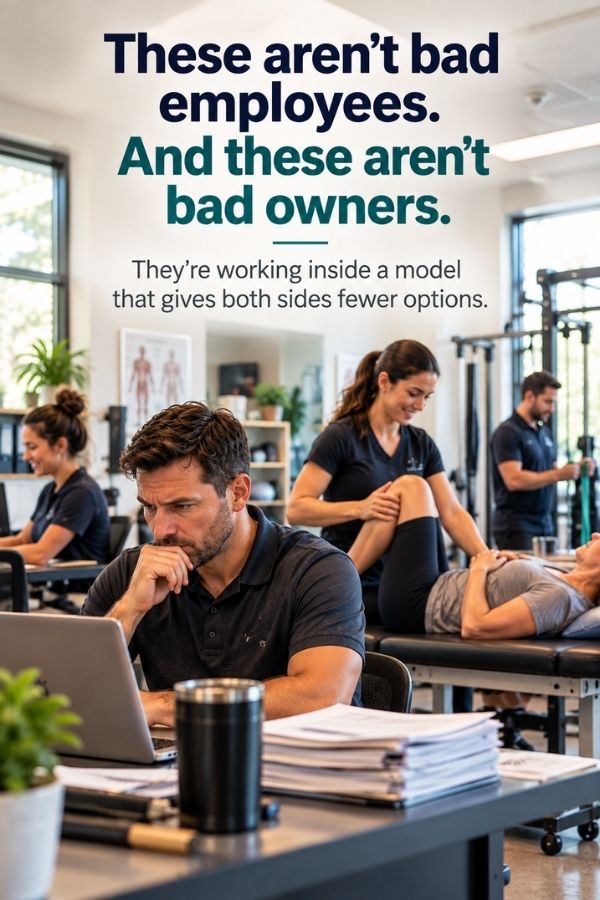
They're not on opposite sides of the problem. They're caught inside the same problem.
The people you most want to reward can need more at exactly the time the clinic has less room to give it.
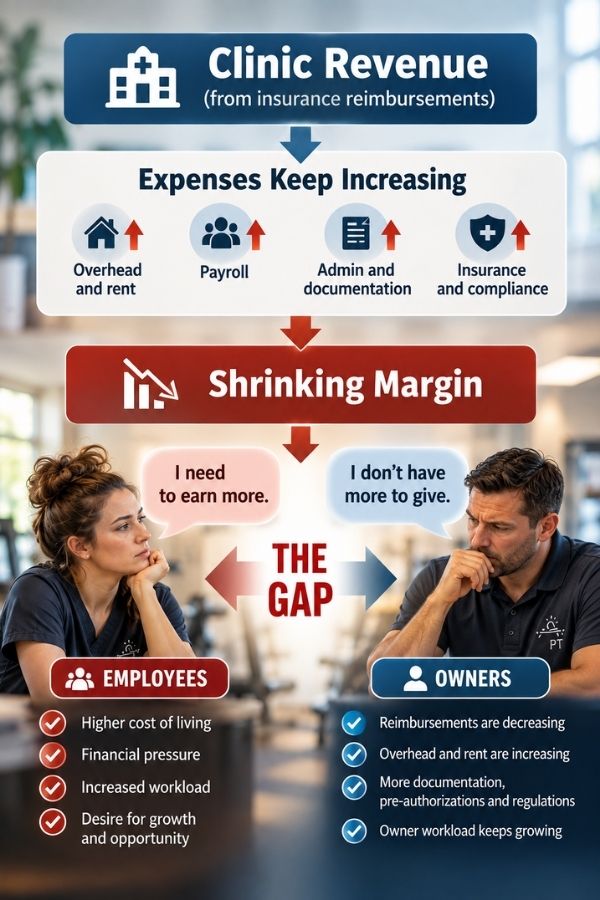
Traditionally, almost everything has to come out of the same economic engine: patient visits and reimbursement.
Revenue comes in. Overhead, payroll, rent, insurance, documentation and administrative expenses come out.
And when those expenses rise faster than reimbursement, there isn't an unlimited amount left to redistribute.
The traditional model gives them very few ways to do it without taking that money from somewhere else.
What if we stopped asking the clinic to carry the whole burden?
How could a clinic create more opportunity for its people without simply asking the owner to treat more patients, market harder or pull more money out of already pressured clinical margins?
Not a replacement for physical therapy. Something that can grow alongside it.
Physical therapy remains the clinical engine. But it doesn't necessarily have to be the only economic engine inside the organization.
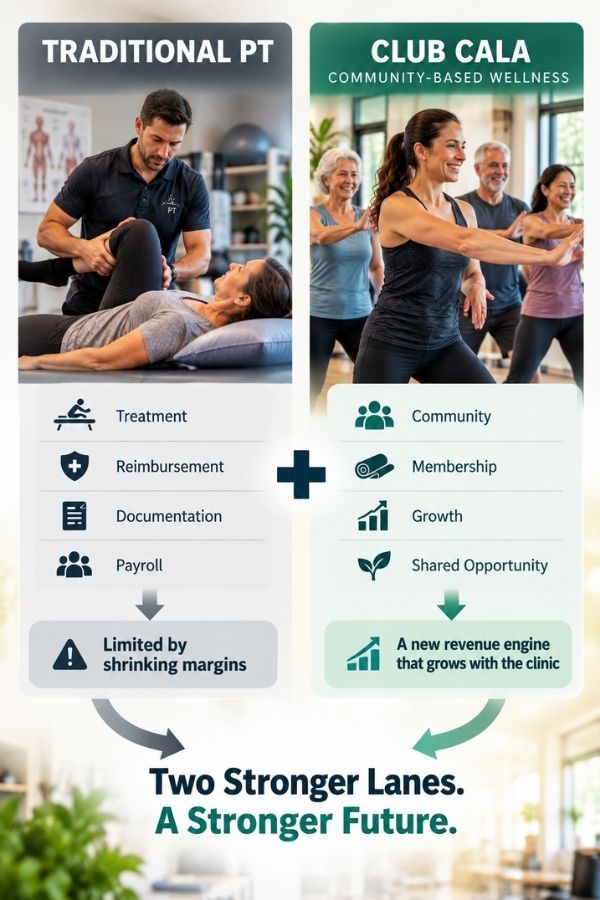
Don't just divide the same pie differently.
Create a bigger pie.
What if growing something valuable for your community could simultaneously create more opportunity for your employees and another source of revenue for your practice?
That's the idea behind Club CALA.
What if growing the community helped everyone grow?
Club CALA creates another pathway beyond the traditional treatment-and-reimbursement model.
Members gain an ongoing place for movement, connection and continued growth. Employees can help build that community and participate in its growth. And the clinic develops recurring revenue that isn't entirely dependent upon reimbursement.
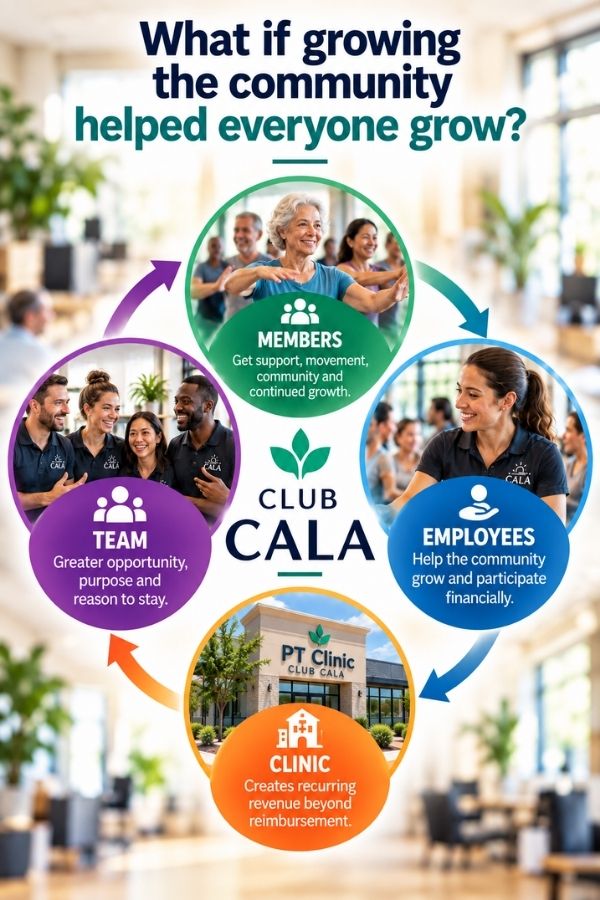
For Members
Continued movement, connection, education and community beyond a traditional episode of care.
For Employees
More ways to contribute, create value and potentially participate financially as the community grows.
For The Clinic
A recurring revenue pathway that isn't built entirely around treating more visits or collecting more reimbursement.
Your clinic's future doesn't have to depend on asking everyone to do more of the same.
There may be a way to give your people more opportunity, strengthen the practice and build something your patients and community actually want to remain part of.
Built to operate alongside your existing physical therapy practice.